


How Öxnehaga can be developed into a safer area
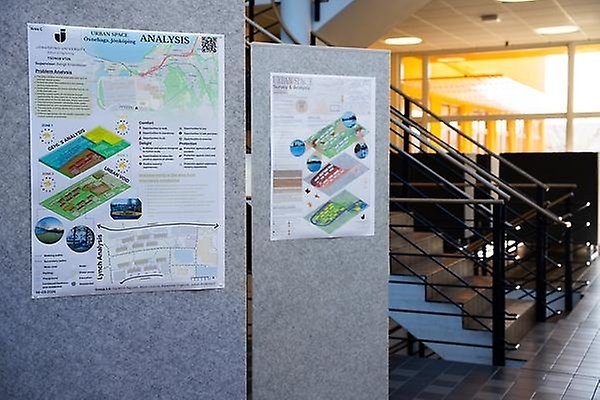
How can the residential area Öxnehaga in Huskvarna become a safer, more pleasant, and a more sustainable neighbourhood? Around 60 students at the School of Engineering at Jönköping University have developed proposals for this. Their work is currently on display in an exhibition at the school.
%20_JU_9726.jpg)
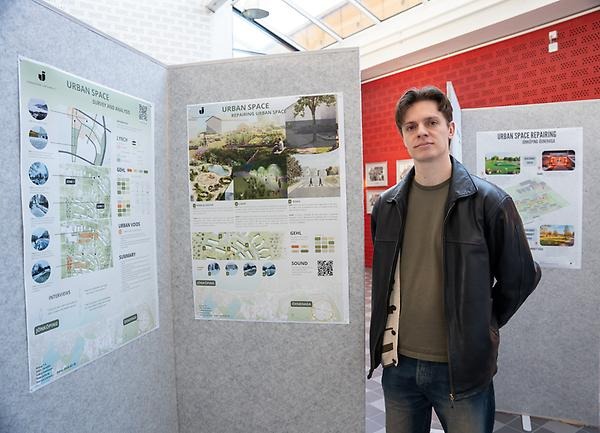
Lukas Svensson is one of the students who has developed proposals on how Öxnehaga in Jönköping can be improved.
The project has been conducted in collaboration with the housing company Vätterhem and is part of an ongoing development initiative at Öxnehaga. The area has long been characterized by social unrest and a lack of safety, and students in the Building Design with Architecture program at the School of Engineering have worked with these challenges in the course Urban Space.
%20_JU_9743.jpg)
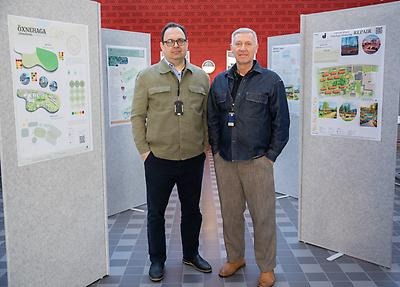
Course instructors Géza Fischl and Bengt Erlandsson emphasize the importance of students working with real problems in real environments.
“This is a real problem, and it is important to connect education to current societal issues”, says Géza Fischl, course coordinator and senior lecturer in architecture at the School of Engineering.
Through analyses, site visits, and interviews with residents, the students have developed concrete ideas to improve the area.
“Make use of what already exists in the area”
The proposals that Lukas Svensson has helped develop include making better use of what already exists in the area but is not fully utilized.
“We saw that there are several green spaces that are not being used today, so we suggested developing them with plantings. We also proposed adding a water feature, such as a pond, which could both increase the sense of well-being and improve stormwater management”, says Lukas Svensson.
Improved lighting along walkways and clearer pedestrian crossings are also highlighted as important measures to increase safety in the area.
“Has been rewarding”
For the students, the project has provided an opportunity to work practically with a real location and its challenges.
“It has been rewarding to work with an area that we have been able to visit and experience firsthand”, says Lukas Svensson.
“Many of the students will work with urban planning in the future. That is why it is important that they engage with sustainability issues and real environments, says Bengt Erlandsson”, programme coordinator and course supervisor.
Exhibition at Öxnehaga
The students have interviewed residents at Öxnehaga about their outdoor environment and have been met with strong engagement in their work. After the sketches have been presented at the school, they will also be exhibited in a public venue at Öxnehaga in mid-April.
%20_JU_9763.jpg)


